Tuesday, October 18, 2005

Mid-term exhibition

The Sacred Realm


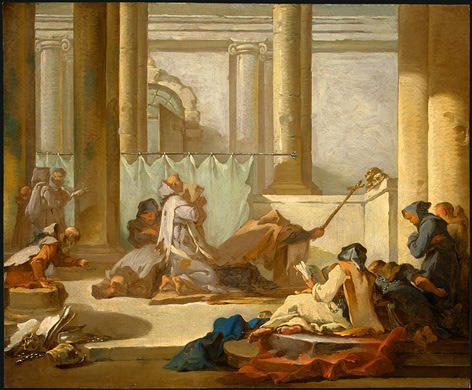
Michel-Francois Dandre Bardon
French, 1700 - 1783
The Adoration of the Skulls, mid 18th century
oil on canvas
Gift of Lewis Einstein.


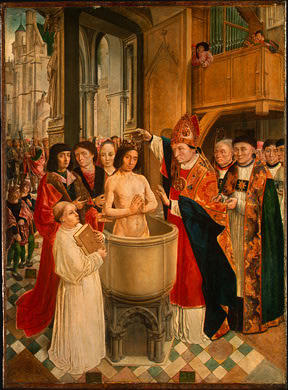
Master of Saint Giles
Franco-Flemish
oil on panel, painted surface
The Baptism of Clovis, c. 1500
Samuel H. Kress Collection1952.2.15


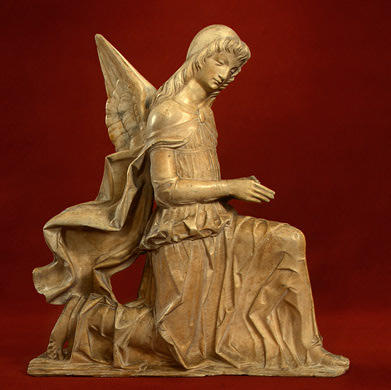
Giovanni Antonio Amadeo
Kneeling Angel, 1470/1480
marble
Samuel H. Kress Collection1939.1.320


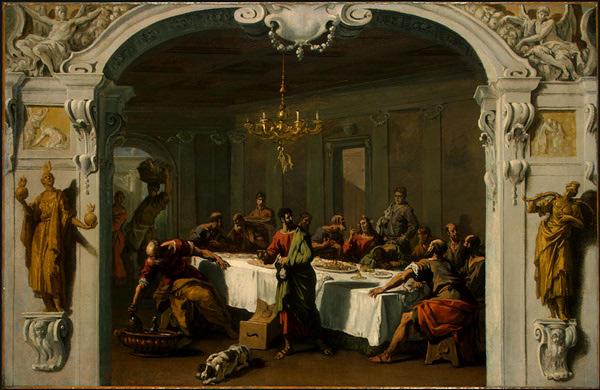
Sebastiano Ricci
The Last Supper,
oil on canvas
1713/1714
Samuel H. Kress Collection1943.4.32


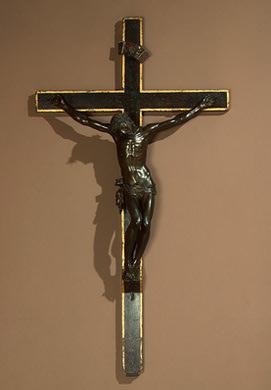
Pietro Tacca
Florentine, 1577 - 1640
The Pistoia Crucifix, c.
bronze
1600/1616
Ailsa Mellon Bruce Fund1973.9.1


Source: www.nga.gov

Thursday, October 06, 2005

Activity #5

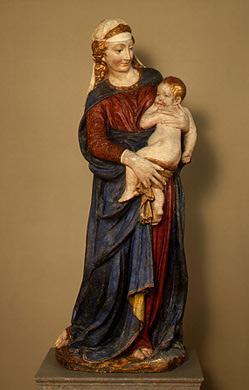
The sculpture "Madonna and Child" which is in the Andrew W. Mellon collection serves to

represent external realities and it is majorly inspired by religion. Religion is a very huge part of

our world today and the sculpture represents that aspect of reality. The sculpture chooses to

represent religion by bringing to life the virgin Mary and baby Jesus.

The Sculpture "Madonna and Child" is majorly defined by its spiritual expression and

undoubtedly inspired by religion. The spiritual intent of the sculpture is to symbolize the

affection Mary feels towards Jesus and color come to play in showing the affection. The use of

warm colors on the Virgin Mary's robe seems to signify warmth and affection for baby Jesus and

this would not have been the result if cool colors were replaced by warm colors.


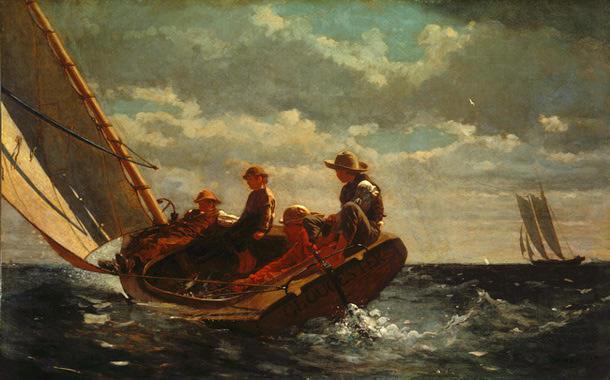
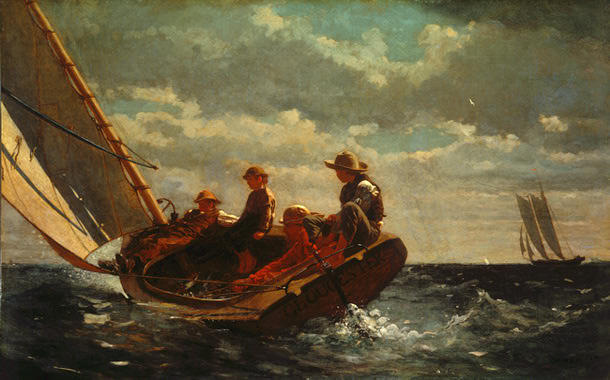
The Painting "Breezing up a Fair Wind" by Winslow Homer serves to represent external

realities and also the theme of art and nature. The painting, rather than showing the "pretty

aspects of sailing, includes turbulence in order to convey the sometimes tumultous aspects of

sailing. The use of cool colors in the sky to darken it emphasizes that not only is turbulence

occuring but it is also during the later hours of the day. The effect of the use of cool colors would

not have been the same if the artist had chosen to express turbulence and distress by using

warm colors.

Thursday, September 22, 2005

Activity #4: Write About It!

As one looks at this sculpture " Madonna and Child", it is obvious to see the inspiration behind the

sculpture. Emphasis is placed on baby Jesus by the way the virgin Mary carefully holds him. The question of

is emphasis given to virgin Mary because the expression on her face seems like a focal point, or is emphasis

placed on baby jesus because of the peaceful and innocent look on his face? The sculptor potrays unity in the

sculpture by having the virgin Mary carry baby Jesus in her arms. Both the virgin Mary and baby Jesus are

place in asymmertical balance because of the scale of Mary, in comprison to the scale of Jesus. Homer's

"Breezing Up a Fair wind" exhibits asymmetrical balance. There are various elements in the painting that

contributes to this balance. The boat in the forground is has a larger scale in comparison to the boat in the

background. Homer paints the waves of the sea in a rythmic pattern and that, as well as the tilt of the boat

constitutes as being the focal point of the painting.

Activity #3: Blog it!!!


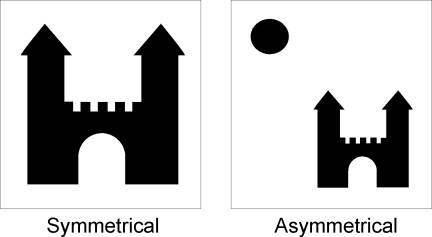
The two types of balance the text describes are

Symmetrical Balance, and Asymmetrical

balance. Symmetrical balance balances equal

forces around a central point or axis. If an

imaginary vertical axis were drawn right through

the center of the piece, the halves would be

exact mirror images balancing each other. If a horizontal line wete through the center of the

piece from left to right, the upper and lowerhalves would also consist of symmetrical balanced,

though not identical visual components. If one element is replaced by a smaller one, it will put

the symmetry out of proportion. Assymetrical balance is the counterbalance of the weight of

dissimilar areas in a piece. Dark colors may be heavier than light ones, busily detailed areas may

be heavier than unfilled ones, and objects far from the center may be heavier those near the

center.

Activity #1: Online Museum Visit


Thursday, September 15, 2005

Activity #2


At first glance, the

sculpture"Madonna and Child" by Florentine in 1860 seemed like

a very fascinating one and I immediately chose it. The sculptor

uses various art elements to depict Mary's love

towards the child. The sculptor ensures that we follow the line between Mary's eyes and the

child. Mary's eyes are so fixed on the child's face that our attention is automatically drawn to it.

The sculptor also shows Mary's fondness of the child by the way Mary's body is contoured, her

hips toward him, to support his weight, and her shoulders thrusted away from him in order to

view his face. The artist uses warm colors in the sculpture, probably to convey a sense of

warmth between Mary and the child. The second work of art I chose was "Breezing up a fair

wind" by Winslow Homer (1873-1876). What striked me first about Homers painting was the

fact that the boat seemed to be experiencing turbulence. The contrast between the cool colors

used for the sky and the warm colors used for the boat and its constituents also caught my

attention, it seemed that the artist was somewhat trying to convey a message of calm in the

sorrounings, but turbulence in the seas. The artist also seemed to use athmosepheric

perspective to highlight the fact that the people on the boat were in such peril.
About me(Creativa Blog)....


I'm a really down to earth person who accepts people for who they are. I'm intelligent, charismatic and goal oriented. I have great plans for my future and I wont settle for less. My friends describe me as crazy but I beg to differ but anyway, I can only be me sometimes I agree with them though because I just tend to talk about off the wall topics but I guess that's just part of my uniqueness, life's too short to care about what people think about you, just be yourself because chances are nobody wants to be you.